

Insomnia affects millions of people who struggle to fall asleep, stay asleep, or wake feeling rested. While good sleep hygiene, stress management, and medical guidance are key, a growing body of research suggests that certain medicinal mushrooms may support healthier sleep by calming the nervous system, reducing inflammation, and balancing stress hormones.
Dr Noels Mushroom Powders focuses on high-quality, dual-extracted, certified organic mushroom extracts designed for maximum bioavailability. For those seeking natural support for insomnia, our formulas featuring Lion’s Mane powder, Cordyceps powder, Chaga powder, Reishi powder, and Turkey Tail powder can play a complementary role in a broader sleep support routine.
How Insomnia Develops: Stress, Inflammation and Nervous System Imbalance
Insomnia is rarely “just” a sleep problem. It often arises from:
- Chronic stress and elevated cortisol
- Anxiety and overactive “fight or flight” responses
- Inflammation that disrupts brain and nervous system function
- Metabolic issues such as blood sugar swings
- Immune imbalances and chronic illness
Medicinal mushrooms do not work as sedative drugs. Instead, they appear to modulate the stress response, support immune balance, protect brain cells, and improve overall resilience, all of which can translate into deeper, more restorative sleep over time.
Lion’s Mane: Supporting Brain Health and Restful Sleep
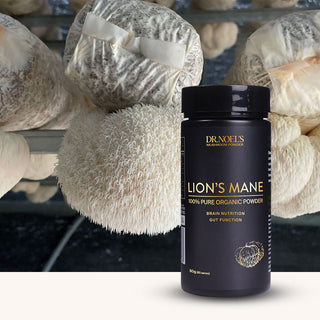
Lion’s Mane (Hericium erinaceus) is best known for its neuroprotective and nootropic properties. It contains compounds such as hericenones and erinacines that can stimulate nerve growth factor (NGF) in the brain, which helps maintain healthy neurons and may improve cognitive function.
For insomnia, Lion’s Mane is particularly relevant because:
- It may reduce mild anxiety and depressive symptoms, which are common in sleep problems. In a small randomized, placebo-controlled trial in women, Lion’s Mane cookies improved scores of anxiety and depression after four weeks of use, suggesting a calming influence on the nervous system.
- Animal studies indicate Lion’s Mane can modulate the sleep-wake cycle and increase non-rapid eye movement (non-REM) sleep, the phase associated with physical restoration.
- By supporting brain plasticity and nerve health, Lion’s Mane may help normalize the neural circuits that regulate sleep, mood, and stress.
Taken consistently, Lion’s Mane is not a quick “knock out” aid but a gentle, long-term support for a calmer, clearer mind that is more able to wind down at night.
Cordyceps: Balancing Energy by Day, Rest by Night
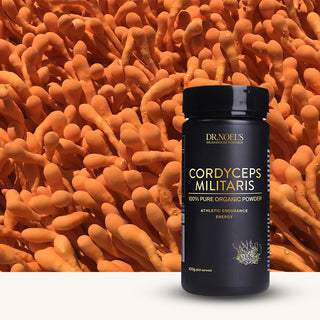
Cordyceps (Cordyceps militaris or Cordyceps sinensis) is traditionally used for stamina and energy, which may sound counterintuitive for insomnia. However, healthy sleep depends on a robust circadian rhythm. You need sufficient energy and alertness by day so that sleep pressure naturally builds toward night.
Cordyceps may assist in several ways:
- Studies show it can improve ATP production and oxygen utilization, which supports daytime vitality without the “wired” effect of stimulants.
- Animal and preliminary human data suggest Cordyceps helps regulate cortisol and other stress hormones, which is crucial since chronically high evening cortisol is a major driver of insomnia.
- By supporting mitochondrial function and reducing fatigue in the day, Cordyceps may indirectly help restore a more normal sleep-wake pattern at night.
For those with burned out, “tired but wired” insomnia, Cordyceps can be a helpful daytime ally that complements calming nighttime mushrooms like Reishi.
Chaga: Inflammation, Antioxidants and Sleep Quality
Chaga (Inonotus obliquus) is rich in polyphenols, melanin, and betulinic acid. It is one of the most antioxidant-dense mushrooms known. Oxidative stress and low-grade inflammation are increasingly recognized as disruptors of deep sleep.
Evidence suggests that:
- Chaga has strong anti-inflammatory and antioxidant actions in cell and animal studies, including protection against oxidative damage in brain and liver tissues.
- By supporting immune balance and reducing inflammatory signaling, Chaga may indirectly improve sleep quality, particularly in those whose insomnia is linked to chronic illness or systemic inflammation.
- Chaga may also help stabilize blood sugar, which can reduce middle-of-the-night awakenings due to drops or spikes in glucose.
Chaga is not sedating, yet over time its systemic support can create a healthier physiological environment for restorative sleep.
Reishi: The Classic “Spirit Calming” Mushroom
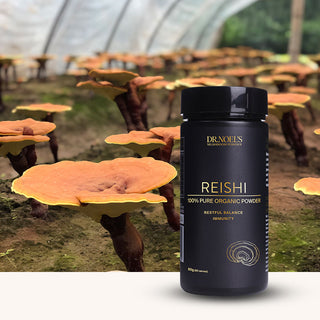
Reishi (Ganoderma lucidum) is historically known in traditional Chinese medicine as a “shen” or spirit-calming herb. Modern research shows why Reishi is so valued for sleep:
- Animal studies indicate Reishi extracts can increase total sleep time and non-REM sleep and can shorten sleep latency when used consistently.
- Polysaccharides and triterpenes from Reishi appear to interact with GABAergic and serotonergic systems in the brain, similar in pathway to some conventional sleep and anxiety medications, yet with a gentler effect.
- Reishi has demonstrated anti-anxiety and stress-modulating properties in several preclinical and preliminary clinical studies, including reductions in fatigue and improved well-being in individuals with neurasthenia-like symptoms.
For insomnia, many people find Reishi particularly helpful when taken regularly in the evening as part of a wind-down routine, supporting a natural sense of calm and relaxation without grogginess the next morning.
Turkey Tail: Immune Balance and Sleep Resilience
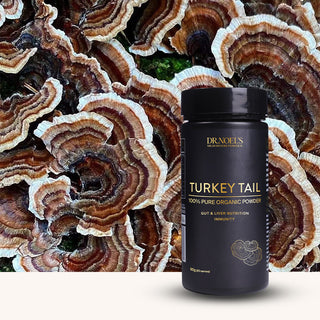
Turkey Tail (Trametes versicolor) is best known for its immune-modulating polysaccharides such as PSP and PSK. Sleep and immunity are tightly interconnected. Poor sleep weakens immune defenses and immune dysregulation can worsen insomnia.
Turkey Tail may support sleep indirectly by:
- Helping normalize an overactive or underactive immune response, which may reduce nighttime inflammatory signaling that disrupts sleep.
- Supporting a healthier gut microbiome. Emerging research links Turkey Tail polysaccharides to prebiotic effects, and gut microbiota play a key role in producing neurotransmitters and metabolites that influence sleep.
- Enhancing resilience during and after illness, when sleep is often disturbed.
For those whose insomnia is intertwined with frequent infections or immune challenges, Turkey Tail can be a strategic part of a broader health and sleep plan.
Why Dr Noels Mushroom Powders Are Different
With over 15,000 customers, Dr Noels Mushroom Powders has seen a consistent pattern. Customers who take our mushroom extract powders daily for at least 6 to 8 weeks frequently report significant improvements in their overall health, including better stress tolerance, fewer nighttime awakenings, and more refreshing sleep on waking. While individual experiences vary and we never claim to treat or cure insomnia, these reports align with what the research suggests about the long-term, cumulative effects of medicinal mushrooms on the nervous, immune, and endocrine systems.
Our powders are carefully designed to be among the best available on the market for those seeking sleep-supportive benefits:
- Dual extracted in both hot water and alcohol for highest bioavailability of polysaccharides, triterpenes, and other key actives
- Certified organic and rigorously tested for purity, including heavy metals and microbial contaminants
- Fruiting body focused, avoiding unnecessary fillers and myceliated grain that dilute potency
- Finely milled for smooth mixing and optimal absorption
This combination of dual extraction, organic sourcing, and strict quality control helps ensure that each serving delivers a concentrated, consistent profile of active compounds that your body can actually use. Over time, that consistency is what supports meaningful shifts in sleep quality and overall resilience.
How to Use Medicinal Mushrooms for Insomnia Support
- Take daily, not just on “bad” nights. Mushrooms work cumulatively rather than as instant sedatives.
- Use calming mushrooms such as Reishi and Lion’s Mane in the late afternoon or evening and more energizing support such as Cordyceps earlier in the day.
- Combine with solid sleep hygiene: a regular bedtime, reduced blue light at night, a cool dark bedroom, and limiting caffeine and alcohol.
- Work with your healthcare practitioner if you are on medications, pregnant, or have a medical condition.
FAQs about Medicinal Mushrooms and Insomnia
1. Will medicinal mushrooms knock me out like a sleeping pill?
No. Medicinal mushrooms such as Reishi and Lion’s Mane are not sedative drugs. They work more by calming the stress response, supporting brain and immune function, and helping your body return to its natural sleep rhythm over time. Many people notice gradual improvements in sleep depth and ease of falling asleep rather than a strong “knock out” effect.
2. How long does it take to notice sleep benefits from Dr Noels Mushroom Powders?
Most customers report subtle changes within 2 to 3 weeks such as feeling calmer in the evening or waking more refreshed. More pronounced sleep improvements are often reported after 6 to 8 weeks of consistent daily use, which reflects how long it can take to meaningfully shift nervous system and stress patterns.
3. Can I take these mushrooms if I already use a prescription sleep medication?
Many people do use medicinal mushrooms alongside conventional sleep medications, but this should always be done under the guidance of a qualified healthcare professional. Mushrooms can influence immunity, blood sugar, and nervous system activity, so medical supervision ensures that any adjustments to your medication or supplement routine are done safely.
4. Which Dr Noels mushroom powders are best to start with for insomnia?
For primarily sleep-related concerns, many people begin with Reishi in the evening combined with Lion’s Mane earlier in the day to support mood and cognitive calm. Those with low daytime energy but poor sleep at night often add Cordyceps in the morning to help reset their circadian rhythm. Chaga and Turkey Tail are frequently added for immune and inflammatory support when those issues contribute to waking at night.
5. Are there any side effects or people who should avoid medicinal mushrooms?
Most people tolerate medicinal mushrooms well, especially when products are organic, pure, and correctly extracted. Mild digestive changes can occur when first starting. Individuals with mushroom allergies, those on immune-suppressing medications, or people with complex medical conditions should consult their healthcare practitioner before use. Pregnant or breastfeeding individuals should also seek medical advice prior to starting any new supplement, including mushroom extracts.
Selected Sources
- Nagano M, Shimizu K, et al. Reduction of depression and anxiety by 4 weeks Hericium erinaceus intake. Biomedical Research. 2010.
- Wachtel Galor S, Yuen J, Buswell JA, Benzie IFF. Ganoderma lucidum (Lingzhi or Reishi). In: Herbal Medicine: Biomolecular and Clinical Aspects. 2nd ed. 2011.
- Paterson RRM. Cordyceps: a traditional Chinese medicine and another fungal therapeutic biofactory. Phytochemistry. 2008.
- Song FQ, Liu Y, Kong XS, et al. Inonotus obliquus (Chaga mushroom): a systematic review of biological activities and safety. Food & Function. 2013.
- Ooi VE, Liu F. Immunomodulation and anticancer activity of polysaccharide protein complexes. Current Medicinal Chemistry. 2000.