
A headline about mushrooms and cancer can leave out the detail that matters most: what was actually tested? A substance applied to cells in a laboratory, a specialised preparation given after surgery and a retail mushroom powder represent very different kinds of evidence.
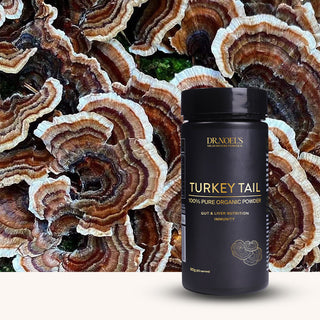
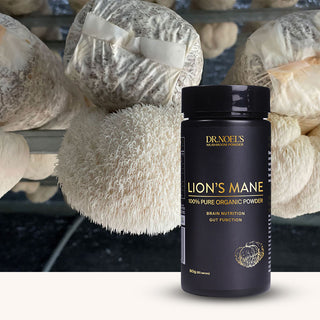
Lion’s mane (Hericium erinaceus) and turkey tail (Trametes versicolor) both appear in this research. Understanding the studies means keeping those differences in view. The research discussed here does not establish retail products made from either mushroom as cancer treatments or as ways to prevent cancer returning.
Start with the study behind the headline
One frequently cited paper is a review by Winder and colleagues in Acta Pharmaceutica. It appeared online in 2020 and in the journal’s 2021 volume. It discusses existing research, including experiments in mice and human cell lines. It is not a new clinical trial, and a recent article describing it does not make the underlying evidence recent.
A review can help explain why scientists are interested in a subject. To understand what a finding might mean for patients, we still need to examine the individual studies.
Turkey tail and the specific PSK evidence
Much of the clinical discussion concerns polysaccharide-K, usually called PSK: a particular protein-bound polysaccharide preparation derived from turkey tail. It has a history of use alongside cancer treatment in Japan. Polysaccharopeptide, or PSP, is a different preparation. The US National Cancer Institute’s evidence summary describes these distinctions.
A Japanese randomised trial published in 1994 enrolled 262 people who had undergone surgery to remove gastric cancer. It compared mitomycin and fluorouracil chemotherapy with the same regimen plus PSK. The researchers reported better five-year survival and disease-free outcomes in the PSK group.
That finding belongs to a defined preparation, patient group and treatment regimen. It cannot establish that a retail turkey tail powder has the same effects, or that the result applies to other cancers or today’s different treatment combinations.
Other trials also show why the comparison matters. A later Japanese trial involving 357 people with colorectal cancer compared uracil/tegafur plus PSK with uracil/tegafur plus leucovorin. It did not establish that the PSK regimen met the study’s criterion for being no worse on disease-free survival. This was a different question from adding PSK to otherwise identical treatment, so it should not be presented as a direct repeat of the gastric-cancer trial.
Immune measurements have limits
In a small phase I study published in 2012, nine women completed a six-week course of a particular turkey tail preparation after radiotherapy for breast cancer. Researchers examined tolerability and immune measurements.
This early study was too small, and was not designed, to establish whether the preparation improved survival or prevented recurrence. A change in immune-cell counts is a biological observation; its importance for a patient’s cancer outcome needs separate testing. Short-term tolerability in a few participants also cannot establish safety for every person or treatment combination.
What the lion’s mane studies can tell us
Lion’s mane research includes laboratory and animal experiments that explore possible mechanisms. For example, a 2014 study of specialised extracts used cancer cell lines and mice bearing transplanted tumours. Although the paper refers to human gastrointestinal cancers, the experiments were not treatment trials in people with cancer.
A 2020 study combining lion’s mane-derived proteins with fluorouracil also used a mouse tumour model. It investigated tumour growth, inflammatory markers and gut bacteria. Findings from that model cannot demonstrate that taking lion’s mane repairs chemotherapy-related digestive damage in patients.
The same caution applies to claims about nerve damage. A study of lion’s mane and neuropathic pain examined rats with experimentally induced diabetes. It did not test chemotherapy-induced neuropathy in people. These studies can generate research questions, but they do not justify recommending lion’s mane for these treatment complications.
Four details worth checking
When you encounter a mushroom research claim, look beyond the headline:
- The preparation: Was it whole powder, an extract, PSK, PSP or an isolated compound?
- The participants: Did the study involve cells, animals or people with a clearly defined diagnosis?
- The comparison: What else did each group receive, and was there a suitable control group?
- The outcome: Did researchers measure laboratory markers, symptoms, recurrence or survival, and for how long?
A mushroom’s name alone does not answer any of these questions. Treating all preparations as interchangeable can turn a narrow finding into a claim the study never tested.
Bring supplement questions to your oncology team
Before starting any mushroom supplement during cancer treatment, speak with your oncologist or oncology pharmacist. Bring the exact label and ingredient list, and tell them about other medicines and supplements you take.
Cancer Council Australia recommends discussing complementary therapies with your doctor before starting them. Some therapies can interfere with treatment or worsen side effects. Limited interaction research should not be read as proof that a product is safe to combine with cancer medicines.
Do not delay or replace prescribed cancer care with a supplement. If digestive symptoms, numbness, pain or emotional distress are affecting you, tell your treatment team so they can assess the problem and discuss appropriate support.
This article is general education about interpreting research. It is not a treatment recommendation.