
Yes, mushroom coffee can contain caffeine. If the mix includes ordinary coffee, adding mushrooms does not remove that caffeine. The amount depends on the particular recipe and how much you use. A mushroom drink made without coffee may be different, but we would still check its other ingredients before calling it caffeine-free.
At Dr Noel’s, we keep two decisions separate: which mushroom ingredient you want, and what you want in the rest of your cup. That distinction matters if you are replacing your usual coffee and expect the replacement to contain less caffeine.
Start with the base of the drink
The words “mushroom coffee” describe a product category, not a fixed caffeine level. Turn the pack over and look for instant coffee, ground coffee or coffee extract. Those ingredients are the first reason to ask about caffeine.
A coffee-free blend also deserves a closer look. Food Standards Australia New Zealand explains that caffeine occurs naturally in coffee, tea and cocoa. A mushroom drink containing tea or cocoa can therefore contain caffeine even when there is no coffee in the recipe. Check for added caffeine too.
Decaffeinated is another useful distinction. It does not necessarily mean zero caffeine: the US Food and Drug Administration notes that decaf coffee and tea still contain some caffeine. If your aim is to avoid caffeine entirely, look for clear information about the finished product rather than relying on “decaf”, “coffee alternative” or the mushroom name.
Two labels show why there is no single answer
These are manufacturer declarations for two specific products, checked on 30 October 2026. They illustrate the difference between formulations; they are not independent laboratory results or an average for mushroom coffee sold in Australia.
| Product | Declared caffeine | Serving to check |
|---|---|---|
| RYZE Medium Roast | Approximately 50 mg per serving | One tablespoon / 6 g, according to its label information |
| Four Sigmatic Protein Coffee | Around 100 mg per serving | One scoop; its preparation directions use 8 US fl oz of water |
Both named products include coffee. Their numbers apply to those products and their stated servings, not every product from either brand. Formulas and market versions can change, so compare the pack you are buying with the manufacturer’s current information.
We would not describe either number as “low” without saying what it is being compared with. A home-made coffee, a café espresso and a large brewed coffee are not interchangeable reference cups. Nor does a lower declared amount establish that a drink will feel better for a particular person.
Your mug may contain more than one serving
The useful calculation is simple: caffeine per stated serving × number of servings used = approximate caffeine in the drink. For a mix declaring about 50 mg per serving, using two servings gives about 100 mg. That is label arithmetic, assuming the mix is uniform and the formula is unchanged.
Adding water is different from reducing the powder. In a hypothetical example, the same 50 mg mixed into 200 mL gives 25 mg per 100 mL; mixed into 400 mL, it gives 12.5 mg per 100 mL. If you drink the whole cup, both still provide 50 mg. A larger, milder-tasting drink does not automatically contain less caffeine.
For the same reason, adding a mushroom product to your usual coffee does not decaffeinate it. When comparing a replacement with your existing routine, count the actual servings in the mug and the other caffeinated drinks you have during the day.
Mushroom milligrams answer a different question
A prominent mushroom-blend amount on the front of a pack is not a caffeine declaration. Neither is a mushroom extract ratio. Those figures describe different ingredients or different ways of expressing their quantities.
If you want to compare both the mushroom ingredient and the caffeine, you need both sets of information. A blend total alone also does not tell you the amount of each mushroom. Our guide to mushroom extract weight, raw-material equivalents and blend totals explains how to keep those units separate.
When a caffeine number is missing, we would ask the manufacturer for the amount per stated serving and the serving weight it relates to. Missing information is a reason to ask, not evidence that the product contains none.
Choosing the mushroom ingredient separately
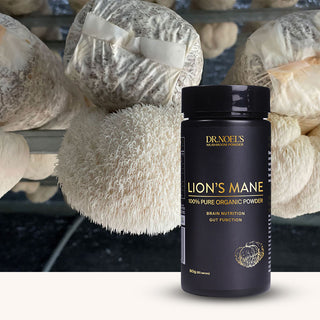
If you prefer to choose your own drink base, our Organic Lion’s Mane Dual Extract Mushroom Powder is a mushroom ingredient you can consider separately from a ready-made coffee blend. We make it from fruiting bodies using water and alcohol extraction; the product information lists no added starch, mycelium, substrate or fillers.

Use the current pack directions for the mushroom powder rather than borrowing the scoop size from a coffee mix. If you add it to coffee, the coffee’s caffeine remains. If you choose a different base, check that base’s ingredients and caffeine information. We are not giving a measured caffeine value for an untested home-made combination.
Explore Dr Noel’s Lion’s Mane powder and its ingredient information. Choose the mushroom product on its own merits, and choose the drink around the caffeine level you actually want.