
A mushroom supplement’s quality cannot be judged from one impressive percentage. We want to know which mushroom went into it, which part was used, how it was processed, and what the testing actually measured. Those details need to tell a consistent story.
Our co-founder Xingli Wang contributed to that discussion in Kimberly J. Decker’s feature, Transparency Gaps Threaten Functional Mushroom Sector, published in the July/August 2026 edition of The World of Food Ingredients on Nutrition Insight. The article quoted Xingli in the role of CEO of Zhejiang Biosan Biotechnology.
“The challenge for industry isn’t demand, but ensuring authenticity, transparency, and scientific credibility…”
— Xingli Wang, quoted in the July/August 2026 feature
For us at Dr Noel’s, the useful next step is to turn that industry discussion into questions a customer can actually use. Here is how we connect the label, the mushroom ingredient and the evidence behind it.
Follow the ingredient from cultivation to the label
Once an ingredient has become a fine powder, its appearance tells you little about its identity. A familiar colour or mushroom aroma cannot establish the species, the part used or the composition of an extract. Xingli made this point in the feature when discussing the difficulty of spotting substitutions by looking at a finished powder.
Start with a scientific species name and a clear description of the material. A fruiting body is the mushroom’s reproductive structure. Mycelium is its growing network of fungal threads. Mycelium cultivated on grain, with grain remaining in the harvested material, is another preparation that needs to be described accurately.
These descriptions should not be used interchangeably. Nor should the presence of grain be guessed from a photograph or the word “mycelium” alone. Cultivation and processing affect what remains in the final ingredient. The feature included differing perspectives on mycelium and fermented grain; the practical point for a buyer is that the finished material should be identified clearly.
Then check the process. Is the ingredient milled mushroom material, a water extract, an alcohol extract, or a combination? What is the stated amount per serving? We cover the separate question of ratios and raw-material equivalents in our mushroom extract label guide. A ratio describes part of the production story; it does not replace analysis of the finished ingredient.
Ask what a test result can establish
Xingli’s contribution also challenged the idea that a single headline number can settle every quality question. A total polysaccharide figure, a beta-glucan result, a species identification test and a contaminant screen answer different questions.
Polysaccharides are a broad group of carbohydrates. A total polysaccharide figure is not interchangeable with a result specifically reported for beta-glucans. Even a beta-glucan percentage needs context: the analytical method, the type of sample, and how other carbohydrate components were handled.
That calls for careful interpretation, rather than dismissing all laboratory testing. Methods have defined scopes and can be improved. Ask the laboratory or supplier whether the method is appropriate for that particular mushroom powder, extract or blended product. A result should be read within those limits.
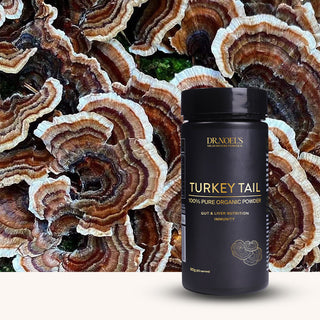
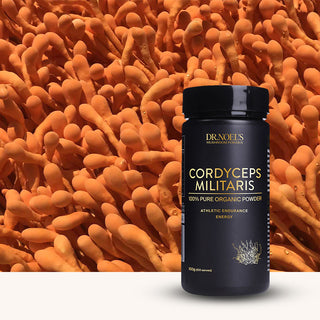
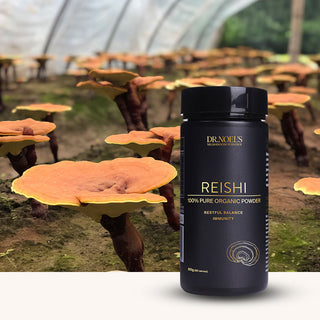
Species-related compounds can add another layer of information. In the feature, Xingli discussed ganoderic acids for reishi, cordycepin and adenosine for Cordyceps militaris, and different compound groups associated with Lion’s Mane fruiting bodies and mycelium. The choice of marker should fit the species and material being assessed.
We would not turn that into a universal ranking chart. Finding a compound is not, by itself, proof of the species, overall purity or a health benefit. Likewise, testing for heavy metals or microbes does not tell you how much of a particular mushroom compound is present. Quality assessment brings several appropriate checks together.

Read the report as well as the number
If a brand supplies a certificate of analysis, look beyond the word “pass”. First, check the sample description. Does the report refer to the raw mushroom, an extract ingredient or the finished product? Those are different points in the supply chain.
Next, connect the document to what you are buying. Look for a sample or batch identifier, the testing date, the laboratory, the method and the reported units. If that connection is unclear, ask the brand to explain it. An old report for one submitted sample should not be presented as a measurement of every current batch.
The units matter too. A specification such as “at least 10%” states a minimum requirement. A numerical result on a report describes what was measured in the submitted sample. To compare them, the analyte, method and reporting basis must match. A percentage measured in a concentrated ingredient cannot simply be assigned to an entire drink or multi-ingredient serving.
Our approach is to keep three questions distinct: What is it? What does it contain? What was checked for contaminants? One document may address several of them, but a positive answer to one is not a substitute for the others. None of these quality checks, on its own, establishes clinical effectiveness.
Applying the same questions to Dr Noel’s
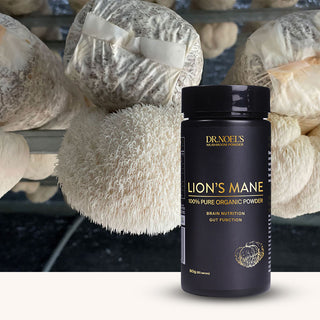
We should be open to the same scrutiny. Our Organic Lion’s Mane Dual Extract Mushroom Powder is described on its product page as made from fruiting bodies using water and alcohol extraction, with no added starch, mycelium, substrate or fillers.
Its published specifications distinguish polysaccharides of at least 15% from beta-glucans of at least 10%. Those are separate specifications, not two names for the same measurement. Beta-glucans are one class of polysaccharides, so these specifications should not be added together. We do not describe the total as 25%.
That distinction gives you something concrete to compare. It also leaves room for the next question: what documentation supports the particular specification or batch you are considering? You can contact our team about ingredient, sourcing or testing information, stating the product and batch number where available.
Explore our Lion’s Mane powder and read its ingredient specifications. We want the reason to choose Dr Noel’s to be information you can examine: a clearly described ingredient, relevant evidence and an explanation of what each claim means.
Source note: This is Dr Noel’s original commentary prompted by Kimberly J. Decker’s July/August 2026 feature, pages 40–43. Xingli Wang was a quoted contributor to that article. The feature was an industry discussion, not a clinical study or an endorsement of this retail product.